ADVERTISING: Week 09
31st May 2016 (Week 9)
Gabriella Godeliva Adytanthio (0324170)
Advertising Principles & Practice
Howard Gardner's Multiple Intelligence Test, VARK
Lecture
Howard Gardner's Multiple Intelligence Test
Not really a lecture per se. We mainly discussed about the multiple intelligence test and learning preference test that we were asked to take before the class. The multiple intelligence test was 'pioneered' (?) by Howard Gardner, a psychologist. Basically the test is to identify what we're good at.
Here are the 8 types of intelligences and a very rough description of what they mean:
In most cases, a test-taker who's got a really high 'mark' (it's not the correct term but hopefully you get what I mean) on one type of intelligence will have a really low mark on another, and a test-taker who's got mostly low marks on most types of intelligence are generally confused about themselves or in some way not answering the questions properly (self-doubting, etc.)
The whole class shared their respective results on Facebook and we discussed about what we're 'good at' and if it's accurate or not. Mr. Vinod took his time to explain what each person's graph meant, and he also correlated some of the aspects to the work we've done (Project 2 and/or 3). Here's my result:
Next comes the VARK test; VARK stands for Visual, Aural, Read/Write, and Kinesthetic. It is a test that determines what your learning preferences/styles are, like how you learn the best. By getting to know your VARK results, educators get a clearer picture to accommodate your learning style.
VARK is exactly what it says: visual means you learn best by pictures, symbols, graphics, posters, etc.; aural means you learn best by stories, discussions, explanations, etc.; read/write means you learn best by lists, tables, notes, definitions, handouts, etc.; and finally kinesthetic means you learn best by field trips, lab activities, hands-on approach, real-life examples, etc.
All in all it is an enjoyable, informative session that allows us to understand a little bit more about ourselves and others, and it also helps to cool us down from all the intense work we've been doing last week.
Instructions
TIMeS weekly forum question:
Research
I did some sketches to explore the layout of the ad. The first one on the top left is what I did for the first practical quiz, and I sketched out the rest of the alternatives with Mr. Vinod's feedback in mind (about how double points of interests are fighting with each other). I'm still exploring the usage of the right typeface; the only thing I have in mind is using more rounded-looking typefaces—I tried boxy typefaces like Franklin Gothic and it didn't work because it looks very professional/strict.
Feedback
Specific Feedback
(TIMeS question)
(Project 3 revision)
Comprehensive. Well researched. Good variety of supporting facts or data. Data is relevant to the geography and people. Very good work.
Reflection
Experience
I've done the Gardner Multiple Intelligence test before. It's a very fun experience to do it with everyone and see our results, since we get to know each other better. Nothing much happened, but it's quite nice because it allows me to take a breather... is this the calm before the storm?
Observation
I realize that some of us (most of us, considering the small number of people in class) are beginning to get closer. We interact more, not only inside of class but also outside of class. I'd like to say that the contributing element to this development is the multiple intelligence test (haha!). I have no idea about assignments, though, like for real. I ran out of juice a few weeks ago and attempted to refill the glass or fix the blender but so far no results.
Findings
(continuation from last week)
Four driving forces that connects company with consumers
3. Invisibility. I was quite surprised when the word came up; after all, in advertising you want more people to see you, right? Well, after I read the page, here's what I understand.
Guerrilla advertising is named after a technique of warfare called guerilla (duh), which basically involves stuff like ambushing your opponents, raids, etc. with a smaller 'army'. The opposite of guerrilla warfare is traditional warfare, where people fight in the open.
Advertising is more or less the same. In traditional advertising, the 'army' fires 'bullets' in front of your face: "buy this product", "10 years younger with this face cream", "this condom is so thin you won't regret using it", yada yada yada. It's a face-to-face confrontation. Guerrilla advertising finds strength in invisibility, surprise, and unexpectedness. It's like a hide and seek game between the company and the consumers; there's excitement and tension, unlike traditional advertising's blatant showy nature.
"Advertising that gets away with it is advertising that does not look or feel like advertising".
"What smart product placement, cleverly devised guerrilla tactics, and word of mouth all have in common is that they are harder to trace and label as advertising. And, something that is harder to trace is also harder to ignore."
4. Unpredictability. "Conventional advertising lacks unpredictability. It is hard to catch consumers off guard if a message is planted in the middle of a commercial block on television." When you surprise your audience, it cuts through any level of cynicism. You cannot announce yourself beforehand, like a newscaster announcing a commercial break. It's like throwing a surprise party for your best friend: the more unexpected the party, the more surprise your friend will be.
"True unpredictability demands that you are one step ahead, so key elements are agility and mobility. In guerrilla warfare, attacks are swift, sudden and unexpected, to unnerve and confuse the opponent. The more unpredictable a campaign, the more chance it has of gaining people's honest and immediate attention. Consumers should not be expected to have to fit into categories predefined by the brand. Brands should fit in with the unpredictable behavior of the consumer."
Since my birthday is coming up. one thing to remember when trying to throw someone a surprise party: don't do it if the person doesn't like surprise parties! :P
References
Gardner's Multiple Intelligences. (2016). Tecweb.org. Retrieved 2 June 2016, from http://www.tecweb.org/styles/gardner.html
multiple intelligences - howard gardners multiple intelligences theory - visual auditory kinesthetic learnings styles VAK model. (2016). Businessballs.com. Retrieved 2 June 2016, from http://www.businessballs.com/howardgardnermultipleintelligences.htm
Himpe, T. (2008). Advertising is dead - long live advertising!. London: Thames & Hudson.
Picture credits
Figure 1 ~ 4
Personal documentation
Figure 5 — Advertising is Dead: Long Live Advertising!. (2016). Retrieved from http://ecx.images-amazon.com/images/I/51YoqZt3kpL._SX258_BO1,204,203,200_.jpg
Gabriella Godeliva Adytanthio (0324170)
Advertising Principles & Practice
Howard Gardner's Multiple Intelligence Test, VARK
Lecture
Howard Gardner's Multiple Intelligence Test
Not really a lecture per se. We mainly discussed about the multiple intelligence test and learning preference test that we were asked to take before the class. The multiple intelligence test was 'pioneered' (?) by Howard Gardner, a psychologist. Basically the test is to identify what we're good at.
Here are the 8 types of intelligences and a very rough description of what they mean:
- Visual-spatial — physical space, environments, pictures, imagining
- Musical — sound, rhythm, ability to concentrate with music in the background, oral explanations
- Kinethetic — learning by doing, the physical activities, movement, touching
- Linguistic — learning by reading, words, text, thinking in words
- Logical-mathematical — reasoning, calculating, connecting the dots, identify patterns and relationships
- Naturalistic — understanding the natural environment, recognition of flora/fauna, natural specimens, noticing change in environment
- Interpersonal — interacting with other people, socializing, friends
- Intrapersonal — reflective ability, understands self, recognize their feelings and thoughts
In most cases, a test-taker who's got a really high 'mark' (it's not the correct term but hopefully you get what I mean) on one type of intelligence will have a really low mark on another, and a test-taker who's got mostly low marks on most types of intelligence are generally confused about themselves or in some way not answering the questions properly (self-doubting, etc.)
The whole class shared their respective results on Facebook and we discussed about what we're 'good at' and if it's accurate or not. Mr. Vinod took his time to explain what each person's graph meant, and he also correlated some of the aspects to the work we've done (Project 2 and/or 3). Here's my result:
 |
| Figure 1 — My Gardner test result |
VARK is exactly what it says: visual means you learn best by pictures, symbols, graphics, posters, etc.; aural means you learn best by stories, discussions, explanations, etc.; read/write means you learn best by lists, tables, notes, definitions, handouts, etc.; and finally kinesthetic means you learn best by field trips, lab activities, hands-on approach, real-life examples, etc.
 |
| Figure 2 — My VARK test result |
All in all it is an enjoyable, informative session that allows us to understand a little bit more about ourselves and others, and it also helps to cool us down from all the intense work we've been doing last week.
Instructions
TIMeS weekly forum question:
1) Explain in your own words how you learn?Answer:
2) And how do you know you have learned something?
1. My dominant "segment" of intelligence is linguistic, logical, and musical, which means I'm good at reading, solving problems or calculations, and listening to rhythm/sound. I learn best when the learning method is related with the things I'm good at doing. Show me charts/diagrams, give me reading material, explain to me the learning material verbally, make me watch an educational video, etc.
2. I know I've learnt something when:
- I can explain that something to other people correctly
- I can write down the explanation to that something
- I ask the right follow-up questions to that something
- If it's a skill I can repeat it or teach other people how to do it (point 1)
- I have formed a personal opinion towards that something with valid evidence to back up my opinion
Research
 |
| Figure 3 — Layout sketches |
I did some sketches to explore the layout of the ad. The first one on the top left is what I did for the first practical quiz, and I sketched out the rest of the alternatives with Mr. Vinod's feedback in mind (about how double points of interests are fighting with each other). I'm still exploring the usage of the right typeface; the only thing I have in mind is using more rounded-looking typefaces—I tried boxy typefaces like Franklin Gothic and it didn't work because it looks very professional/strict.
 |
| Figure 4 — Top left: original for practical quiz Everything else: variations |
Feedback
Specific Feedback
(TIMeS question)
Comprehensive as always Gabby :) Good job!
(Project 3 revision)
Comprehensive. Well researched. Good variety of supporting facts or data. Data is relevant to the geography and people. Very good work.
Experience
I've done the Gardner Multiple Intelligence test before. It's a very fun experience to do it with everyone and see our results, since we get to know each other better. Nothing much happened, but it's quite nice because it allows me to take a breather... is this the calm before the storm?
Observation
I realize that some of us (most of us, considering the small number of people in class) are beginning to get closer. We interact more, not only inside of class but also outside of class. I'd like to say that the contributing element to this development is the multiple intelligence test (haha!). I have no idea about assignments, though, like for real. I ran out of juice a few weeks ago and attempted to refill the glass or fix the blender but so far no results.
Findings
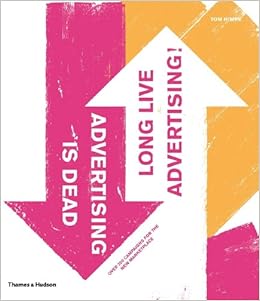 |
| Figure 4 — Advertising is Dead: Long Live Advertising! |
(continuation from last week)
Four driving forces that connects company with consumers
3. Invisibility. I was quite surprised when the word came up; after all, in advertising you want more people to see you, right? Well, after I read the page, here's what I understand.
Guerrilla advertising is named after a technique of warfare called guerilla (duh), which basically involves stuff like ambushing your opponents, raids, etc. with a smaller 'army'. The opposite of guerrilla warfare is traditional warfare, where people fight in the open.
Advertising is more or less the same. In traditional advertising, the 'army' fires 'bullets' in front of your face: "buy this product", "10 years younger with this face cream", "this condom is so thin you won't regret using it", yada yada yada. It's a face-to-face confrontation. Guerrilla advertising finds strength in invisibility, surprise, and unexpectedness. It's like a hide and seek game between the company and the consumers; there's excitement and tension, unlike traditional advertising's blatant showy nature.
"Advertising that gets away with it is advertising that does not look or feel like advertising".
"What smart product placement, cleverly devised guerrilla tactics, and word of mouth all have in common is that they are harder to trace and label as advertising. And, something that is harder to trace is also harder to ignore."
4. Unpredictability. "Conventional advertising lacks unpredictability. It is hard to catch consumers off guard if a message is planted in the middle of a commercial block on television." When you surprise your audience, it cuts through any level of cynicism. You cannot announce yourself beforehand, like a newscaster announcing a commercial break. It's like throwing a surprise party for your best friend: the more unexpected the party, the more surprise your friend will be.
"True unpredictability demands that you are one step ahead, so key elements are agility and mobility. In guerrilla warfare, attacks are swift, sudden and unexpected, to unnerve and confuse the opponent. The more unpredictable a campaign, the more chance it has of gaining people's honest and immediate attention. Consumers should not be expected to have to fit into categories predefined by the brand. Brands should fit in with the unpredictable behavior of the consumer."
Since my birthday is coming up. one thing to remember when trying to throw someone a surprise party: don't do it if the person doesn't like surprise parties! :P
References
Gardner's Multiple Intelligences. (2016). Tecweb.org. Retrieved 2 June 2016, from http://www.tecweb.org/styles/gardner.html
multiple intelligences - howard gardners multiple intelligences theory - visual auditory kinesthetic learnings styles VAK model. (2016). Businessballs.com. Retrieved 2 June 2016, from http://www.businessballs.com/howardgardnermultipleintelligences.htm
Himpe, T. (2008). Advertising is dead - long live advertising!. London: Thames & Hudson.
Picture credits
Figure 1 ~ 4
Personal documentation
Figure 5 — Advertising is Dead: Long Live Advertising!. (2016). Retrieved from http://ecx.images-amazon.com/images/I/51YoqZt3kpL._SX258_BO1,204,203,200_.jpg